
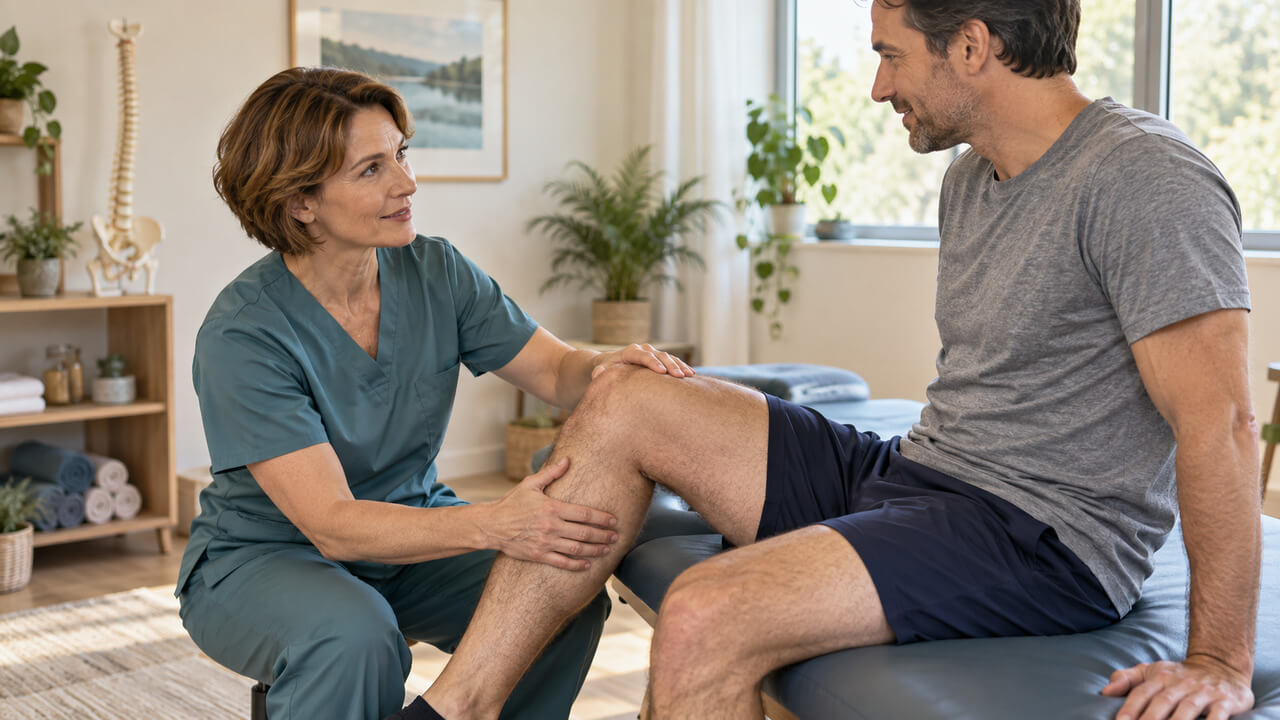
People often consider osteopathy for muscle or joint discomfort that makes everyday movement harder. Common reasons include a stiff neck, an aching lower back or difficulty returning to activity after a minor injury. Whether it is suitable depends on what is causing the symptoms and what kind of care you need.
For people living in Collingwood, Thornbury or the surrounding area, the useful question is specific: could hands-on care help me move more comfortably while I work on recovery?
Back pain and stiffness
Some people with back pain may find manual treatment helpful for short-term symptom relief. An assessment should consider the pattern of pain, movement, daily demands and any signs that need medical investigation.
Hands-on care is only one option. Activity, appropriate exercise and an understanding of the problem also matter. The website’s conditions overview explains the kinds of concerns people bring to an appointment.
Pain running into the leg needs a more careful assessment than an ordinary muscle ache. A practitioner should not assume every leg symptom is caused by a tight muscle or offer a guaranteed correction.
Neck and shoulder discomfort
Difficulty turning your head, shoulder discomfort, or stiffness after a long day at a desk may be reasons to seek an assessment. The goal is to understand the limitation and choose an appropriate response, rather than blame one supposedly perfect or imperfect posture.
Evidence for manual techniques varies. Research summarised by NCCIH on neck pain suggests some potential benefit, but also highlights limitations in study quality and consistency. This should support a cautious trial of suitable care, not a promise of a cure.
If the shoulder became painful after a fall, or you have new arm weakness or persistent numbness, medical assessment may be the better first step. The local neck pain page offers more background on this area.
Hip and knee movement problems
Discomfort when using stairs, walking or getting out of a chair can have several explanations. An osteopathic assessment may explore which movements are difficult and whether hands-on care is appropriate.
The important distinction is between helping someone manage symptoms and claiming to repair damaged tissue. Manual treatment does not rebuild worn cartilage or replace rehabilitation for a significant ligament injury.
For someone whose goal is a longer waterfront walk, progress should be judged against that activity. Being less tender on a treatment table is less useful if walking tolerance does not improve. Our knee pain guide describes common situations in which knee symptoms are noticeable.
Recovery alongside a rehabilitation plan
After an injury has been assessed, some people choose manual care to help with discomfort or stiffness during recovery. Its role should be clear and compatible with any advice from a physician, surgeon or physiotherapist.
For an active person, recovery also means rebuilding the ability to tolerate the task: running, lifting, skiing or a full workday. A discussion of manual therapy in sports care places hands-on treatment within a broader plan rather than treating it as a complete rehabilitation programme.
If repeated treatment gives only brief relief, ask whether something needs to change in the assessment, exercise plan or activity demands.
What osteopathy should not be expected to treat
Osteopathy should not be presented as a general cure for digestive disease, infections, hormone problems or other medical conditions. Feeling relaxed after treatment is not evidence that an underlying disease has been treated.
It is also not the right first response to a suspected fracture, dislocation or a serious new neurological symptom. New or unexplained symptoms need an appropriate medical assessment before they are treated as an ordinary movement problem.
Deciding whether it is a sensible option
Before starting, ask what the practitioner thinks they can reasonably help with and how improvement will be measured. Useful goals might include reaching a shelf, sleeping with fewer interruptions or returning to an activity you have been avoiding.
You should also understand the proposed frequency, cost and review point. For Collingwood residents comparing approaches, the osteopathy versus physiotherapy article can help clarify the questions to ask. Neither label guarantees the best fit for every person.