
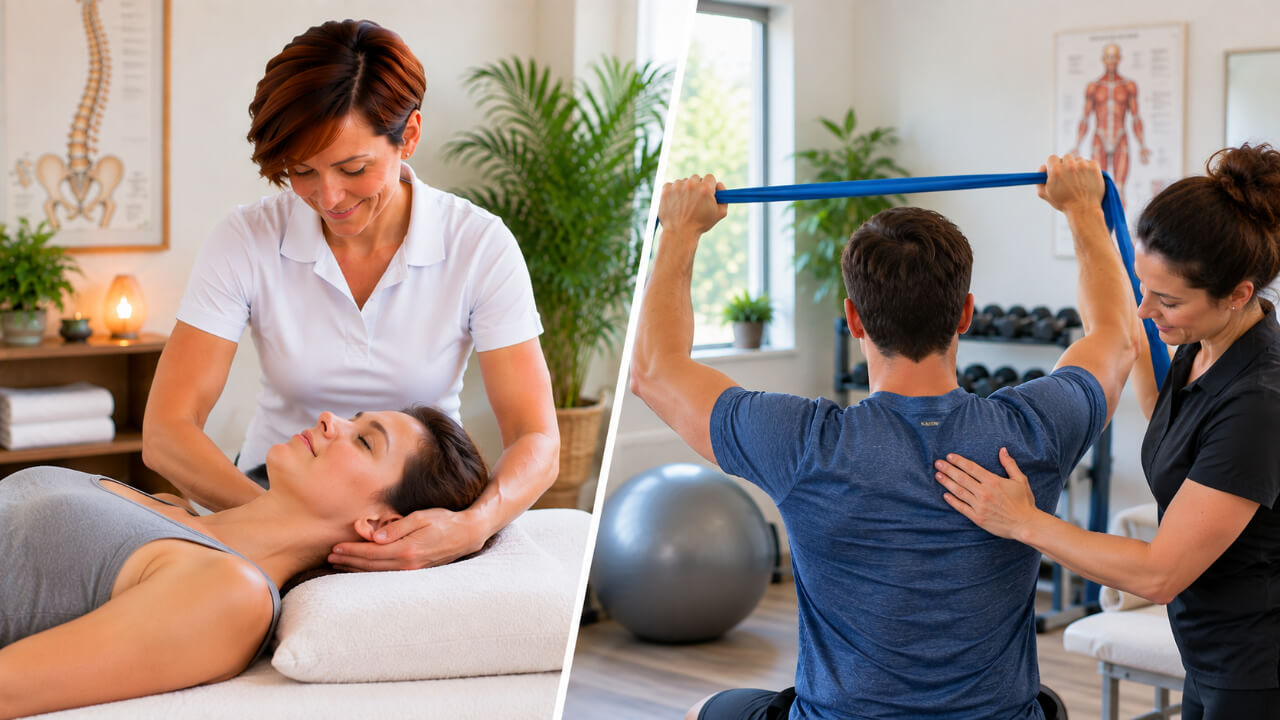
If you have back pain, a sore shoulder, a sports injury or difficulty moving comfortably, you might wonder whether you should see an osteopath or a physiotherapist.
There is some overlap between the two, but the way they assess and treat musculoskeletal problems can be quite different.
Here’s the simple version:
Consider osteopathy if you want a hands-on approach that looks at how different areas of your body may be contributing to your pain or restricted movement.
Consider physiotherapy if rehabilitation, strengthening, exercise progression or recovery after an injury, surgery or significant loss of function is your main goal.
Neither is automatically better. The right choice depends on what is going on and what you want to achieve.
What Does an Osteopath Do?
Osteopathic manual practitioners primarily use hands-on assessment and treatment.
Rather than focusing only on the area that hurts, an osteopathic assessment may also look at surrounding joints, muscles and movement patterns.
For example, if you come in with hip pain, the assessment may also consider your pelvis, lower back and the way the hip moves.
Depending on the assessment, treatment may include techniques such as:
- Joint mobilization
- Soft tissue techniques
- Fascial techniques
- Gentle stretching and movement
- Other osteopathic manual techniques
The goal is generally to improve mobility, reduce musculoskeletal discomfort and help the body move more comfortably.
What Does a Physiotherapist Do?
Physiotherapists are regulated healthcare professionals in Ontario who assess and treat problems affecting movement and physical function.
Treatment varies considerably depending on the physiotherapist and the condition being treated, but it commonly includes:
- Exercise rehabilitation
- Strengthening
- Mobility exercises
- Stretching
- Movement retraining
- Education and activity modification
- Hands-on/manual therapy
Physiotherapy is particularly common during rehabilitation after an injury or surgery, or when someone needs to progressively rebuild strength, mobility and function.
Osteopathy vs Physiotherapy at a Glance
| Osteopathy | Physiotherapy | |
|---|---|---|
| Main focus | Musculoskeletal function, mobility and how different areas of the body interact | Movement, function and rehabilitation |
| Hands-on treatment | Major component | May be used |
| Exercise programs | May include movement advice, depending on practitioner | Often a major component |
| Joint mobility | Common focus | Common focus |
| Soft tissue treatment | Common | Often used |
| Strengthening | Not usually the primary focus | Often a major focus |
| Post-surgical rehabilitation | Not usually the primary choice | Common |
| Sports rehabilitation | Can address musculoskeletal pain and mobility | Often focuses on progressive rehabilitation and return to sport |
| Treatment approach | Primarily hands-on and individualized | Often combines exercise, education and manual treatment |
When Should You Consider Osteopathy?
Osteopathy may be worth considering if you are experiencing:
- Back or neck pain
- Hip, knee or shoulder discomfort
- Stiffness or restricted movement
- Recurring musculoskeletal discomfort
- Sciatica-like symptoms
- Pain associated with work or everyday activities
- Musculoskeletal discomfort associated with sports or exercise
It can also be a good option if you prefer hands-on treatment and want the practitioner to consider how different areas of your body may be affecting the problem.
When Should You Consider Physiotherapy?
Physiotherapy may be particularly appropriate when you need:
- Rehabilitation after surgery
- Rehabilitation following a significant injury
- Progressive strengthening
- A structured exercise program
- Balance or mobility training
- Recovery after a fracture or prolonged immobilization
- Return-to-sport rehabilitation
- Help rebuilding physical function
For example, if you have had knee surgery and need to gradually restore strength, range of motion and function, physiotherapy would commonly play an important role in your rehabilitation.
What About Sports Injuries?
This is one area where people often aren’t sure which practitioner to see.
Both may be involved.
An osteopathic manual practitioner may focus on pain, mobility, joint restrictions and surrounding musculoskeletal structures.
A physiotherapist may focus more heavily on rehabilitation, strengthening, exercise progression and safely returning to activity.
Depending on the injury, the two approaches can complement each other rather than compete with each other.
So, Which One Should You Choose?
Here is perhaps the easiest way to think about it.
Choose osteopathy when:
Your main concern is pain, stiffness or restricted movement and you’re looking for a primarily hands-on musculoskeletal assessment and treatment approach.
Choose physiotherapy when:
Your main priority is rehabilitation, strengthening, exercise progression or restoring function after an injury or surgery.
There is considerable overlap, however, and the right practitioner can also depend on your specific condition.
You don’t need to diagnose yourself before making an appointment. A responsible practitioner should assess what is happening and refer you to another healthcare professional when your condition falls outside their scope or another form of care would be more appropriate.
Related:
Osteopathy vs. Chiropractic
Osteopathy vs Massage Therapy