
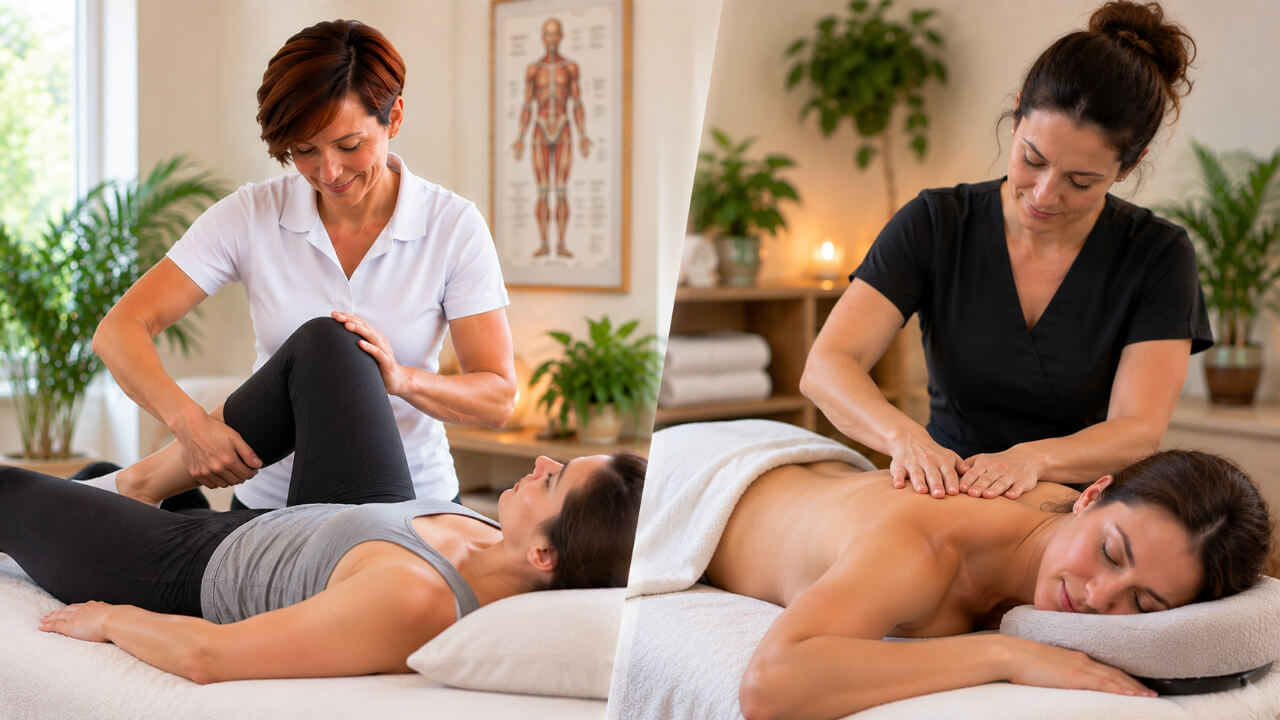
If you’re dealing with back pain, neck stiffness, sore muscles or limited movement, you may be wondering whether you should see an osteopath or a massage therapist.
Both use hands-on techniques, but they generally have different goals. Here’s a simple way to decide which may be a better fit.
What’s the Main Difference?
Massage therapy primarily focuses on the body’s muscles and other soft tissues. Treatment may help reduce muscle tension, promote relaxation and address muscle soreness.
Osteopathy takes a broader musculoskeletal approach. An osteopathic manual practitioner assesses how your joints, muscles and other structures are moving and working together before determining which hands-on techniques may be appropriate.
For example, if your hip hurts, an osteopathic assessment may also consider how your lower back, pelvis and surrounding muscles are moving.
| Osteopathy | Massage Therapy | |
|---|---|---|
| Main focus | Musculoskeletal function and movement | Muscles and soft tissues |
| Includes assessment | Yes | Yes, within massage therapy scope |
| Hands-on treatment | Yes | Yes |
| Good for muscle tension | Yes | Yes |
| Good for relaxation | Not the primary goal | Often |
| Joint mobility focus | Often | More limited |
| Treatment individualized | Yes | Yes |
When Should You Consider Massage Therapy?
Massage therapy may be a good choice when your main concern is:
- Tight or sore muscles
- Muscle tension after exercise
- General stiffness
- Stress and relaxation
- Soft-tissue discomfort
If you’ve had a long week and simply feel tight and tense, massage therapy may be exactly what you’re looking for.
When Should You Consider Osteopathy?
You may want to consider seeing an osteopathic manual practitioner when you’re experiencing:
- Back or neck pain
- Restricted movement or mobility
- Hip, knee or shoulder discomfort
- Recurring musculoskeletal pain
- Sciatica-like symptoms
- Discomfort related to activity, work or sport
- A problem that doesn’t seem limited to one tight muscle
An osteopathic appointment typically begins with a discussion of your symptoms and an assessment of how your body moves. Treatment is then tailored to what is found during that assessment.
So, Which Should You Choose?
A simple rule of thumb:
Choose massage therapy if your main goal is addressing muscle tension, soreness or relaxation.
Consider osteopathy if you have pain or restricted movement and want a broader assessment of how your joints, muscles and surrounding structures may be contributing.
There is also plenty of overlap, and the two approaches can sometimes complement each other.
If you’re unsure, you don’t need to diagnose yourself before making an appointment. An assessment can help determine whether osteopathic care is appropriate or whether another healthcare professional would be a better next step.
Related: Osteopathy vs. Chiropractic